High Court View SUPREME COURT VIEW

Justice and the POCSO Act: Evaluating Current Legal Frameworks

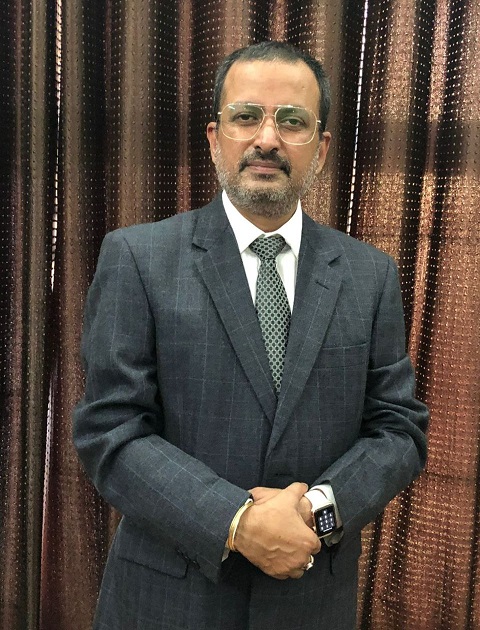
Sachin Tulsi, Advocate (Author’s interpretation)

The Case Study:
The latest Order passed by the Hon’ble Apex Court in XXX Vs. State of Haryana has again raised the question on the investigation done by the Gurugram police authorities, ranging from the Commissioner to the Sub-Inspector, and that also in a case of a minor victim who is just 3.8 years old, irrespective of the fact that the victim faced the trauma, suffering, and distress for 2 continuous months. This article discusses the ruling, highlighting the courts’ continued emphasis on procedural discipline and what can be done to eradicate the disease. The Apex Court has not only questioned the investigative methods adopted by the Gurugram Police but has also strongly objected to the conduct and findings of the Child Welfare Committee, which has served to compound the victimization of the child severely. The Apex Court has observed that the police authorities have, for wholly unjustified and extraneous reasons, sought to dilute the offence by erroneously classifying it under Section 10 of the Act instead of Section of 6 the Protection of Children from Sexual Offences Act, 2012 (POCSO Act) instead of Section of the Act.

What are Sections 6 and 10 of the POCSO Act?
Section 6: (amended in 2019) Mandates strict punishment for aggravated penetrative sexual assault against children. It stipulates a minimum rigorous imprisonment of 20 years, extendable to life imprisonment (for natural life), or the death penalty, along with a fine.

Key Aspects of Section 6 (Punishment for Aggravated Penetrative Sexual Assault):

• Definition & Context:

Deals with offenses listed under Section 5 of the POCSO Act, which defines aggravated penetrative sexual assault (committed by police, armed forces, public servants, or involving extreme violence).

• Punishment:
• Context:

It is directly linked with offences mentioned in Section 9 of the Act.

This section focuses on the breach of trust and the elevated harm caused when a person in authority abuses their position to commit a sexual act against a child.

The Apex Court has categorically observed that there was no doubt that a prima facie case under Section 6 of the Protection of Children from Sexual Offences Act, 2012 (POCSO Act) was made out. The Apex Court has further observed that the police authorities have, for wholly unjustified and extraneous reasons, sought to dilute the offence by erroneously classifying it under Section 10 of the Act.

The Apex Court has further observed that the shifting and inconsistent stance in the affidavit filed by the Commissioner of Police raises serious concerns regarding the fairness and credibility of the investigation. The Apex Court has specifically mentioned that in such circumstances, it is imperative that the incident be subjected to a thorough, impartial, and sensitive investigation, conducted with a humane approach that duly preserves the dignity of the minor victim and her parents.

The Apex Court has categorically remarked that there is a disturbing pattern wherein the police authorities have made concerted efforts to shield the suspects, relying on an irresponsible and casual report submitted by the Child Welfare Committee (CWC). The Apex Court has expressed serious reservations
regarding the academic and professional abilities of the members of the CWC, as well as their expertise in rendering meaningful and reliable assistance to the investigating agency in matters of such sensitivity and gravity.

Considering the gravity of the matter, the Apex Court has issued the following direction:

• The Child Welfare Committee, Gurugram, has been directed to submit its explanations regarding the report dated 06.02.2026.

• The Principal Secretary of the Women and Child Development Department, Government of Haryana, to file an affidavit.

• A senior officer of the Department shall produce the original records concerning the appointment of the Chairperson(s) and members of the Child Welfare Committee.

• A Special Investigation Team (SIT) has been constituted to ensure a fair, dispassionate, and independent investigation.

• The Commissioner of Police, Gurugram, or any other police officers of Gurugram whose details are enumerated in paragraph 27 of the affidavit, shall be entirely disassociated from this investigation.

• All officers listed in paragraph 27 are directed to show cause why appropriate disciplinary and criminal action should not be taken against them.

• The CWC members shall further show cause as to why they should not be ordered to be removed forthwith.

• Dr. Babita Jain, Max Hospital, has also been directed to show cause and explain the circumstances in which she was compelled to change her medical opinion through the report dated 21.03.2026.

• The learned Sessions Judge, Gurugram, is directed that the judicial proceedings in relation to the subject matter, as and when required, shall be placed before the POCSO Court presided over by a woman judicial officer.

Data on POCSO cases:

• A total of 1,77,335 cases of crime against children were registered during 2023, showing an increase of 9.2% over 2022, as per the National Crime Records Bureau’s latest report.

• Conviction rates for POCSO cases in India are notably low, generally fluctuating around 29%–35%, despite high charge-sheet rates (above 90%). While Fast Track Special Courts (FTSCs) increased disposal rates to 109% by 2025
(surpassing new registrations), the overall conviction rate has declined from 35% in 2019 to 29% by 2023, reflecting a high acquittal rate.

C. Comparative Perspective:
The European Court of Human Rights has consistently held that reputational harm and privacy violations engage Article 8 of the European Convention on Human Rights, even when actions occur beyond national borders. ⁶ Similarly, U.S. courts have grappled with jurisdiction in online defamation, balancing free speech with reputational interests.

Key Data on POCSO Conviction Rates:

Why was the POCSO Act 2012 enacted?

The enactment of the POCSO Act in 2012 marked India's explicit recognition of children as a distinct class requiring specialized legal protection against sexual offenses. Prior to POCSO, child sexual abuse cases were prosecuted under the Indian Penal Code (IPC), which lacked child- specific provisions and failed to address the unique vulnerabilities of child victims. The legislative vacuum became particularly apparent following India's ratification of the United Nations Convention on the Rights of the Child (UNCRC) in 1992, which obligated the state to protect children from all forms of sexual exploitation and abuse.

Is the POCSO Act 2012 enough?
Considering the data, it seems the enactment of POCSO has not been a deterrent, so what is the way out? is the question. JTS Lex is of the view that enactment of law is one thing and following it with spirit is another. In the instant case referred to hereinabove, the spirit is missing, and hence the Apex Court has taken a serious view.

Author’s View:
A few systematic advancements may bring an increase in conviction rate and, to some extent, bring a decline in rape cases:
• Through specialized training, implement mandatory, ongoing training for police, prosecutors, concerned authorities, and medical professionals covering trauma-informed approaches, child development, forensic interviewing, and disability accommodations.
• Establish sufficient Special Courts and Fast-Track Infrastructure with dedicated judges, ensuring adequate resources for timely trial completion.
• Implement robust witness protection programs addressing threats, intimidation, and social pressure.
• Mandate age-appropriate sexual abuse prevention education in all schools, including body autonomy, consent, identification of abuse, and help-seeking resources.

The Protection of Children from Sexual Offences (POCSO) Act, 2012,
represents a shift in India’s legal landscape from a purely punitive approach to a more holistic, child-centric framework. As of early 2026, the success of the Act continues to be
evaluated through its ability to provide justice, facilitate healing, and ensure systemic accountability.

About the Author

Sachin Tulsi, a former under secretary to the Government of India with 20 years of unblemished service, a key member of JTS Lex since 2020. Now a lawyer and social activist, he dedicated himself to public awareness, music, and theatre. His mission is to share information on consumer rights, environmental responsibility, and fundamental duties to support people-centered decision-making.

Disclaimer: The insights shared in this article represent the personal viewpoint/interpretation and professional outlook of the author and do not necessarily reflect the official position of the firm, JTS Lex.

WhatsApp